
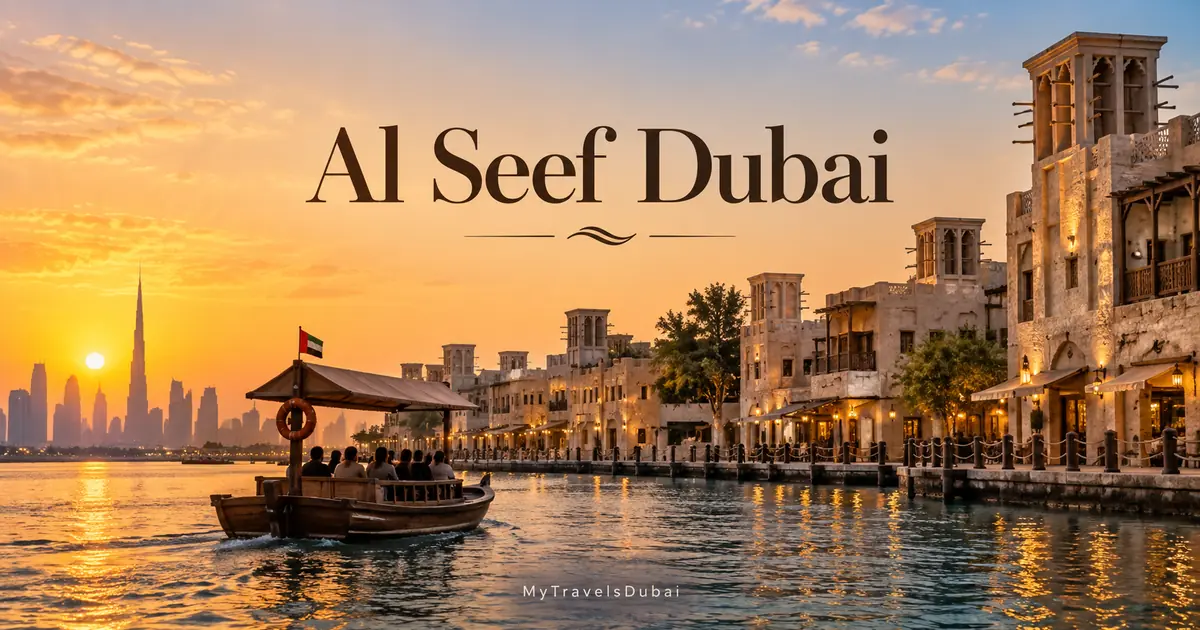

Al Seef Dubai is one of the easiest places to experience Dubai Creek, heritage inspired architecture, traditional shopping and a modern waterfront atmosphere in a single visit.
Located on the Bur Dubai side of Dubai Creek, Al Seef stretches for about 1.8 kilometres beside the water and sits next to the historic Al Fahidi area. Its design deliberately combines traditional wind towers, narrow lanes and old Dubai styling with contemporary restaurants, shops, hotels and visitor facilities.
Unlike a ticketed attraction, you do not need to buy admission simply to explore the waterfront and heritage streets. This makes Al Seef particularly useful for visitors looking for a relaxed and affordable Old Dubai experience.
This guide covers what to do at Al Seef, current opening hours, abra fares, Metro access, parking, the best time to visit and how to combine it with nearby historical areas.
Al Seef Dubai at a Glance
| Detail | Current Information |
|---|---|
| Location | Dubai Creek, Bur Dubai |
| Waterfront length | Around 1.8 kilometres |
| General entry | Free |
| Retail hours | Monday to Thursday 10:00 AM to 10:00 PM |
| Retail Friday to Sunday | 10:00 AM to 11:00 PM |
| Food and dining | Later opening hours |
| Practical Metro station | BurJuman |
| Other nearby Metro station | Sharaf DG |
| Abra route | CR6 Al Seef to Baniyas |
| Current CR6 fare | AED 2 |
| Parking | More than 3,000 spaces |
| Best for | Creek walks, heritage atmosphere, shopping and family visits |
Souk Al Seef’s current official visitor information lists more than 3,000 parking spaces and separate operating hours for retail and food outlets.
What Is Al Seef Dubai?
Al Seef is a waterfront lifestyle and heritage destination on Dubai Creek.
The official destination describes it as a 1.8 kilometre development that reflects Dubai’s culture and heritage while providing modern places to shop, eat and stay. It is located immediately beside the Al Fahidi heritage area.
The destination effectively has two different visual personalities.
One section uses traditional architecture, wind towers, textured walls, narrow passages and old souk styling.
The other feels more contemporary, with modern waterfront buildings and restaurants overlooking the Creek.
This contrast is what makes Al Seef interesting. You can move between a heritage inspired setting and a modern promenade without leaving the destination.
Is Al Seef Free to Visit?
Yes.
There is no general entrance ticket required simply to walk around Al Seef.
You only pay for anything you choose to purchase, such as food, shopping, an abra journey or a separate attraction.
This makes Al Seef a practical choice for travellers who want to enjoy Dubai without adding another expensive admission ticket to the day.
For current destination information, opening hours and services, check the official Al Seef Dubai website.
Best Things to Do at Al Seef Dubai
Walk Along Dubai Creek
The simplest activity is also one of the best.
Walk along the waterfront and watch traditional dhows, abras and other vessels moving through Dubai Creek.
The combination of water, traditional style buildings and the modern skyline across the Creek creates a completely different atmosphere from Downtown Dubai or Dubai Marina.
Late afternoon is particularly attractive because you can experience the area in daylight and then see the waterfront lighting after sunset.
Explore the Heritage Streets
The heritage section is designed to evoke an older period of Dubai.
Expect wind tower architecture, wooden doors, narrow walkways, stone coloured walls and traditional style shopfronts.
It is important to understand that much of Al Seef itself is a modern development inspired by Dubai’s architectural past rather than an untouched historical district.
For genuinely historic surroundings, combine your visit with nearby Al Fahidi.
That distinction is often missing from general travel guides.
Browse the Souk and Shops
Shopping at Souk Al Seef focuses on a different experience from Dubai’s large indoor malls.
The official destination highlights souvenirs, locally inspired gifts, Arabian perfumes, oud, incense, handicrafts and Emirati clothing among the products visitors can find.
This makes it a suitable place to look for a Dubai souvenir while enjoying the waterfront rather than spending the whole visit inside a shopping centre.
Take an Abra Across Dubai Creek
An abra ride is one of the easiest ways to add a traditional Dubai transport experience to your visit.
RTA currently operates CR6 between Al Seef and Baniyas, with a fare of AED 2. Current operating hours are Monday to Saturday from 7:30 AM to 11:45 PM and Sunday from 10:00 AM to 11:50 PM.
This is an important update because some older travel pages still quote AED 1 for Creek abra travel.
RTA currently lists CR7, which connects Al Seef, Al Fahidi and Dubai Old Souq, as temporarily on hold.
There is also an electric abra sightseeing service from Al Seef. RTA currently lists the TR10 private tour at AED 60 for 30 minutes or AED 120 for 60 minutes.
Al Seef Opening Hours
The current official Souk Al Seef visitor page gives different hours for retail and dining.
Retail
Monday to Thursday: 10:00 AM to 10:00 PM
Friday to Sunday: 10:00 AM to 11:00 PM
Food and Dining
Monday to Thursday: 10:00 AM to 11:00 PM
Friday to Sunday: 10:00 AM to 12:00 AM
Individual businesses may keep their own schedules, and special holidays or events can affect timings.
This is why it is better to check a specific restaurant or shop if that venue is the main reason for your visit.
Best Time to Visit Al Seef
Late afternoon into evening is the most practical time for most visitors.
Arriving before sunset allows you to walk beside Dubai Creek while there is still daylight, explore the heritage lanes, and then see the destination after its evening lights come on.
During Dubai’s warmer months, this timing also avoids the strongest midday heat.
From roughly November through March, daytime walking is considerably more comfortable.
If photography is important to you, the period around sunset provides a useful mix of warm natural light, Creek reflections and heritage architecture.
How to Reach Al Seef by Metro
There is no Metro station directly inside Al Seef.
BurJuman Metro Station is one of the most practical options and is served by both the Red and Green lines. Current transport guidance generally places the walk at around 10 to 15 minutes depending on your starting point within Al Seef.
Sharaf DG Metro Station on the Green Line is another useful option, particularly for the Al Fahidi and heritage side.
Be careful with older guides referring to Al Fahidi Metro Station. The current RTA network map calls that Green Line station Sharaf DG, G25.
If you are new to the Metro system, our existing Dubai Metro guide explains the Red Line, Green Line and interchange stations.
Parking at Al Seef
Driving is also straightforward.
The official destination currently lists more than 3,000 parking spaces. Its FAQ says free parking spaces are available on both the heritage and modern sides.
Valet parking is also available.
Current official valet rates are:
Standard parking: AED 20 for the first 2 hours, then AED 15 per additional hour.
VIP parking: AED 105 for the first 3 hours, then AED 25 per additional hour.
If you are visiting mainly for the heritage area, check your parking location before leaving the car so you do not begin at the opposite end of the 1.8 kilometre waterfront.
Al Seef and Al Fahidi: Are They the Same?
No.
They are beside each other but have different identities.
Al Fahidi Historical Neighbourhood represents preserved historical Dubai and is associated with traditional courtyard houses, narrow lanes and wind tower architecture.
Al Seef is a newer waterfront development that uses heritage inspired architecture while adding modern shopping, restaurants and visitor facilities.
Visiting both provides a better experience than treating them as interchangeable.
If you are interested in Dubai’s traditional side, you can also read our Heritage Village Dubai guide when planning an Old Dubai itinerary.
Is Al Seef Good for Families?
Yes.
There is no compulsory admission ticket, the waterfront is easy to explore at your own pace, and families can combine walking, shopping, food and a short abra journey.
The official Souk Al Seef site also positions the area around shopping, dining, museums and cultural experiences for visitors.
Families visiting with younger children should consider the weather carefully.
During hot months, an evening visit is usually more comfortable than walking the full waterfront around midday.
How Long Do You Need at Al Seef?
Around 2 to 3 hours is enough for most visitors who want to walk through the heritage section, see the waterfront, browse a few shops and stop for food or refreshments.
Allow longer if you intend to:
explore neighbouring Al Fahidi,
take an abra across the Creek,
visit the Deira souks,
or have a full meal beside the water.
Al Seef works particularly well as one part of a broader Old Dubai afternoon rather than an isolated full day attraction.
A Simple Old Dubai Itinerary
A practical route is to begin in the Al Fahidi area during the afternoon and explore the traditional neighbourhood first.
Walk towards Al Seef, continue through its heritage streets and waterfront, then take an abra towards the Deira side of Dubai Creek.
You can then explore the traditional souk areas before returning.
This creates a coherent heritage focused itinerary with relatively little road travel.
For more destination ideas, browse our Travels Dubai guides.
Is Al Seef Worth Visiting?
Yes, particularly if your Dubai trip has so far focused mainly on skyscrapers, malls and newer attractions.
Al Seef gives visitors a waterfront setting where Dubai’s traditional visual identity is much more prominent.
Its strengths are not record breaking rides or expensive attractions.
They are atmosphere, Creek views, walking, heritage inspired architecture, shopping and easy access to nearby Old Dubai.
The fact that general entry is free also makes it easy to include in an itinerary without committing to another expensive attraction.
Frequently Asked Questions
What is Al Seef Dubai famous for?
Al Seef is known for its Dubai Creek waterfront, heritage inspired streets, souk style shopping, restaurants and combination of traditional design with modern facilities.
Is Al Seef free to visit?
Yes. There is no general entry fee to walk around the destination.
What are Al Seef opening hours?
Current official retail hours are 10:00 AM to 10:00 PM Monday to Thursday and 10:00 AM to 11:00 PM Friday to Sunday. Dining operates later.
Which Metro station is best for Al Seef?
BurJuman is a practical option because it serves both the Red and Green lines. Sharaf DG on the Green Line is also useful for the heritage side.
Is Al Fahidi Metro Station still called Al Fahidi?
No. The current RTA Metro map identifies station G25 as Sharaf DG. Older guides may still use the former Al Fahidi name.
How much is the abra from Al Seef?
RTA currently charges AED 2 for the CR6 route between Al Seef and Baniyas.
Is parking available at Al Seef?
Yes. The official destination lists more than 3,000 spaces, and its FAQ says free parking is available on both the modern and heritage sides.
How long should I spend at Al Seef?
Around 2 to 3 hours works well for a normal visit. Allow longer if you combine it with Al Fahidi, an abra ride or the Deira souks.
Conclusion
Al Seef Dubai is one of the most accessible ways to experience the atmosphere of Dubai Creek while combining heritage inspired architecture with modern visitor facilities.
You can walk along the 1.8 kilometre waterfront, explore traditional style lanes, shop for souvenirs, enjoy Creek views and take an inexpensive abra without paying a general entrance fee.
For the easiest visit, arrive in the late afternoon, explore the waterfront before sunset and stay into the evening when the heritage streets become illuminated.
Just remember two important current transport details: Al Fahidi Metro Station is now called Sharaf DG, and the Al Seef to Baniyas CR6 abra currently costs AED 2.
For more practical Dubai travel guides, visit MyTravelsDubai.


